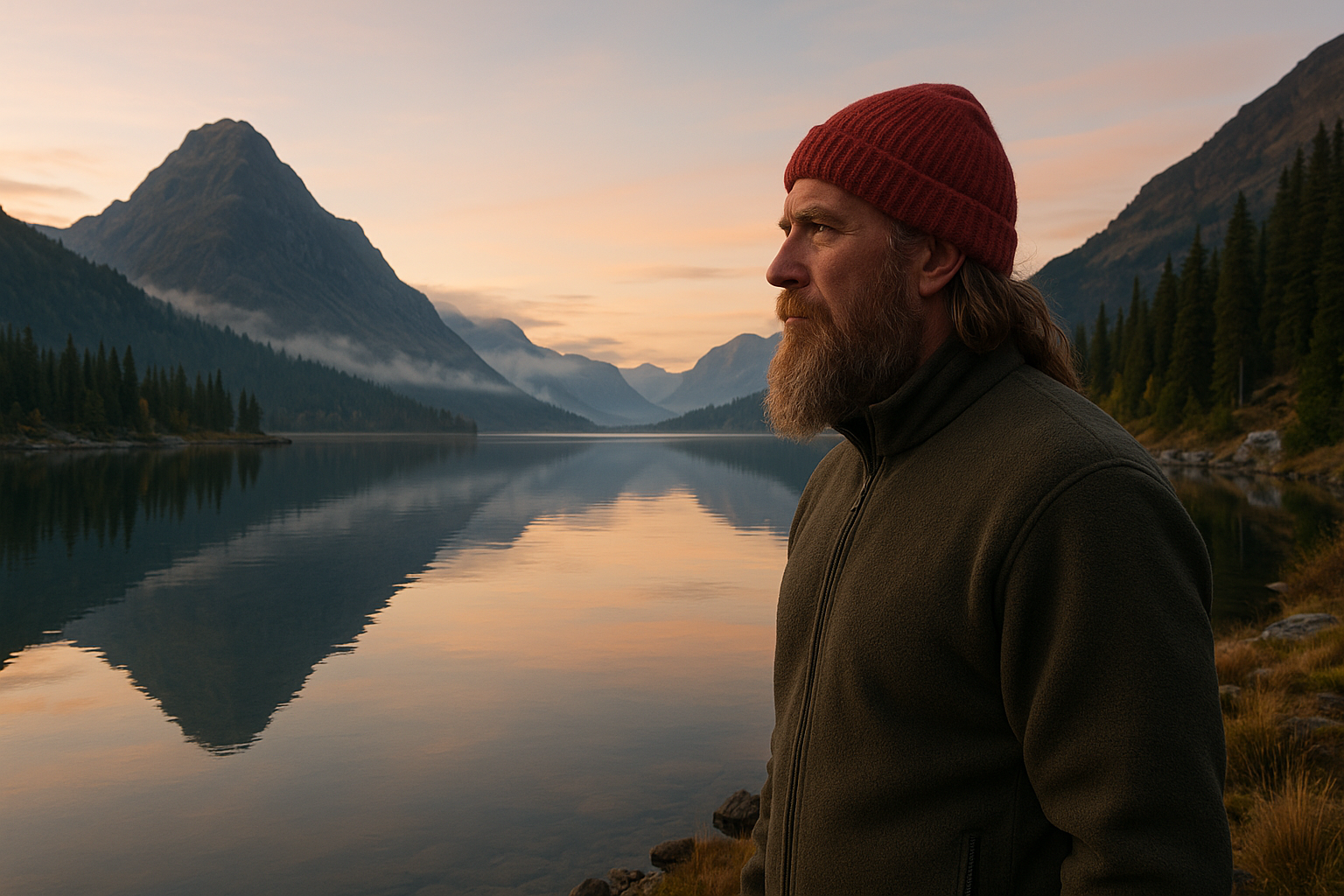
The Layer Between Man and Cold
By Odin Tu
There is a moment every winter when the world takes inventory. The cold draws a hard line through the forest, and everything living must decide which side it will stand on. I prefer to stand exactly on that line. Not as a conqueror and not as prey, but as a witness who knows what to carry and what to leave behind. The layer between man and cold is not a piece of cloth. It is a choice repeated every hour until spring.
I began this trial long before sunrise. The sky was a slate lid with a faint seam of silver on the eastern edge. Snow had fallen during the night, powder on top of an older crust. Every step would need thought. I wore a simple system that I have returned to for many seasons. A thin base that moves sweat, the SASTA fleece as the working heart, and a shell I keep in my pack for wind and storm. I carry fire and food and the tools that earn their keep. I do not carry hope. Hope does not keep you warm. Good decisions do.
I left the cabin door open for a moment to listen to the cold. There is a sound to real winter. It is not the loud snap of ice or the dramatic howl that storytellers love. It is more like a slow hum, low and steady, that drifts through trees and settles into the bones. That sound tells me how hard the day will pull on my heat. I step out and the air bites the inside of my nose. It is clean. It is honest. It asks the right questions.
The first hour is a long climb through old spruce. The forest floor tilts upward as if the land had once tried to stand and then thought better of it. I move at a pace that keeps the engine turning but does not flood the system with sweat. This is where many fail. They rush into the morning and soak their second skin. The cold waits. It has all day. The body works but the fleece must be allowed to work too. I feel the fabric begin its quiet job. It holds the heat that belongs to me and lets the damp air escape. No plastic sheen against the skin. No clammy churn of trapped breath. Only a slow exchange that feels like a conversation with someone you trust.
There is a place on this climb where the trees open into a narrow meadow. The wind uses that gap like a river uses a canyon. I stop here every time and listen. The fleece tells me what it can handle and what it cannot. Today the gusts are sharp but not cruel, and the fleece stands its ground. I do not need the shell yet. The collar rises close under my jaw. The cuffs seal the wrist. The body stays steady. The jacket does not try to be everything. It does not pretend to be weather armor. It is the core of a smart system, and it plays its part with grace.
I cross the meadow and enter birch woods that glow even in dull light. A hare has been busy here. The tracks loop and double back, little chords written on new snow. I follow for a while just to borrow the animal’s paths. The hare knows where the easy steps are. The air grows warmer as the climb eases. Warmth is a gift, but it can turn on you. I open the front zip and let a small breeze inside. I do this often. Small adjustments keep the engine from flooding. The fleece cooperates. It does not cling. It does not trap odor. It simply finds a new balance as the heat changes.
After the birch the land shifts again. Rocks show through the crust. Small rivers run under the snow and whisper in places where the cover thins. I test the edges with my staff. The ice gives a little and holds. I move across quickly, not with fear but with respect. The fleece hides under the harness of my pack and the strap of my knife. It rubs against bark and stone. No snags rise. The face cloth is quiet. A garment that speaks loudly will betray you long before a wolf does.
On the far side of the rocks I find a shelf of windblown snow that faces south. I stop there and take off my pack. The heat inside me rolls outward into the morning. I do not want to lose it fast. I keep the fleece on, open the zip a little more, and drink from my flask. The water is warm because it rested close to my chest. That is another duty of this middle layer. It keeps not only the body at the right side of the line. It keeps anything you hold near your body at the right side as well. Spare battery cells, a knife that must not turn brittle, even a few small sticks of resin that welcome a match. The fleece shelters them like a fox shelters its kits. Close, easy to reach, and away from the blunt edge of winter.
Clouds thin, then rejoin. The light shifts from pewter to pearl. The day asks for movement again. I stow the flask and begin the long contour across the shoulder of the ridge. Here the forest thins and the wind writes its stories without interruption. I feel the first real pull of the cold through the arms. It is not an attack. It is a reminder. The fleece puts up a steady fight. Heat is gathered and kept, but the surface feels dry. If I pull a shell over it, I know it will not load me with wet breath. But I choose to continue without that outer wall because the wind is not honest yet. It will grow and fade and grow again, and a hard shell in those conditions becomes a bellows, not a barrier. The fleece alone keeps me quick and precise.
There is a small ridge outcrop where I like to rest. From there I can look over the long valley that runs down to frozen water and beyond that to hills that look like sleeping whales. I reach the outcrop and sit. The rock is cold and dry. The jacket shares its heat with the stone, but slowly enough that I can stay as long as I choose. I take out a small piece of bread and a sliver of cheese, then add a few bites of spruce gum just to keep old customs alive. Food keeps the body in the fight, but it also keeps the mind keen. A sharp mind spends less energy. A dull mind burns twice as many calories and learns nothing.
I think of the many poor layers I have seen in the hands of eager people. Glossy things that promise miracles. They might stand up in a warm store. They might look good in photographs. They might even work for a short hour on a sunlit path. Under real cold they turn deceitful. They trap sweat at the moment you most need your pores to breathe. They sag when damp and stiffen when frozen. They make the hands clumsy and the shoulders angry. A good fleece does the opposite. It becomes part of you, almost forgotten until you stop and notice that you are still warm and still dry. It is humble. It is patient. It serves.
A soft sound at my left interrupts the thought. A ptarmigan moves from one brush clump to another. The bird is winter white with small flecks of brown, a garment chosen by the law of survival rather than a designer in a city. The bird does what I try to do with my own layer. It becomes part of the place. The cold does not waste energy chasing what it cannot distinguish from itself.
I move on. The route turns down toward the river. The descent is steeper than the climb. There is a trick to walking downhill in snow and crust. Many lean back and brake with the heels. That burns energy and tears ligaments. I step tall and let the hips fall through each stride. The fleece is cut in a way that honors this movement. No pull across the shoulders. No bunching at the waist. The jacket is not trying to show off your shape to a crowd. It is designed for the honest geometry of walking.
Halfway down the slope the weather finally makes up its mind. The wind turns steady and a fine snow begins to fall. Fat flakes are lazy. This snow is not. It carries the sharp memory of sea and ice fields. I pull the shell on. Many people make the mistake of sealing a wet layer under a hard skin. That is a small disaster. The fleece is dry enough to welcome the shell. The system becomes a small house I can carry. Now the warmth is not only mine. It is a pocket of weather, and inside that pocket I can make decisions that are not shaped by panic.
I reach the river at midday. The surface is a calligraphy of black water and white panes. I test several spans of ice with the staff. The edge moans. The message is clear. The safe crossing lies upstream. I follow the bank through willows and dwarf birch that grab at my pant legs. The fleece moves with the brush, not against it. The shell takes the scratches. I let them accumulate like the tally marks of a long game. When I find the right crossing, the ice sings the correct note. I know that note. It is the sound that says step here and step lightly. I obey and the river agrees.
On the far bank I find shelter in a stand of hemlock. I light a small cook fire for tea. Fire in daylight feels like ceremony rather than necessity. Still, I drink the heat with gratitude. When the fire is out I brush a little of its scent from the fleece. Wool and wood smoke are old friends, but a good mid layer should not carry a heavy memory of the flame. This one does not. It returns to its neutral scent, a quiet earthiness that belongs to the North.
I begin the second climb on the far bank. The grade is a letter written to the legs by a stern teacher. This is the part where many layers fail entirely. The body pours heat and moisture into the jacket. The air is colder and the wind sharper. I open the front zip again and take off my hat. Steam rises from the hair. The fleece breathes and the sweat vapor moves. If the jacket cannot handle this exchange, the damp will freeze during the next stop and pull the life out of you. The layer between man and cold must be a gatekeeper. It must know when to welcome and when to refuse.
The ridge narrows near its crown. Snow is trapped there by stunted spruce that bow like old men at prayer. I pull through elbow deep drifts and then kick steps in a short crest of firm windpack. The world opens in every direction. Cloud breaks show blue like fresh water inside white granite. I let the wind slap me. I want the reminder. I want the test. The fleece does not scold. It keeps faith.
I stand in that gale and think about the role of clothing in the old stories. Heroes in those tales wore armor that made them invincible, or so the songs claim. The real world had different heroes. They were not invincible. They were cunning and patient. They dressed with judgment. Bark, hide, woven hair, and later cloth. Each material carried a rule and a price. Today we have better fibers and smarter patterns, but the ancient rule remains. You must know when to add and when to take away. You must know when to slow your breath and when to run. A fine fleece is a teacher as much as a garment. It teaches the rhythm that keeps you just inside the borders of life.
The light begins to slant. Afternoon in winter is a short letter. I start down the long return route through forest that has kept the same shape for a thousand years. Wind noise fades. The small noises return. A twig tick. The hush of snowflakes landing on old snow. The dry rasp of my own breath as it cools. I watch for signs of fatigue. Fatigue is a thief. It steals the simple steps first. Then it steals judgment. Warmth puts up a barrier to that theft. It keeps the head clear. It frees the eyes to notice what matters. I see a set of fox tracks weaving along a fallen trunk and smile. The fox has the same task list that I do. Stay warm. Stay fed. Stay aware. Return home.
I pass through a narrow valley where the shade has not lifted all day. The cold lives here like a permanent resident. I close the zip again and tuck the chin. The fleece feels like the quiet hand of a friend on the shoulder. The body relaxes. The pace remains firm. There is no drama. The miracle is that there is no miracle. The garment simply performs the job it was born to do.
Near dusk the snow stops and the clouds thin. A thin amber rim appears over the western hills. I reach the last rise above the cabin and pause. Heat rises from the body like a heavy mist. I open the jacket and let the day escape. This is my final rule. Do not carry all that heat into the house. Let it drift back into the trees so the body can settle. The fleece does not cling to the sweat of the trail. It releases what should be released. I can walk inside without dripping, without the smell of panic, without the clammy regret that comes from a bad choice.
In the doorway I hang the shell by the stove and place the fleece beside it, not on top of it. I let both breathe. A jacket that cannot breathe when it is off your body is a jacket that cannot be trusted when it is on your body. Steam rises for a minute then disappears. I run a hand over the surface and feel only a faint coolness. Not wet, not heavy. The layer is ready for the next day.
I eat well and drink better. Meat, roots, a little fat. Tea with a splash of something that brings color to the cheeks. I write a few lines in my field book. The notes begin with data. Distance walked. Time in motion. Elevation gained. Air temperature. Wind speed guessed with the old sailor’s eye. Then I add the part that numbers avoid. The fleece held its promise. It stayed silent under brush. It moved with the ribs and hips instead of working against them. It carried warmth like a kept vow. It accepted the shell when needed and then stood alone again when the weather softened. No hot spots. No cling when damp. No heavy memory of the day. Only a quiet readiness for tomorrow.
The fire drops to coals. I hold the jacket up to the lamplight. The fabric shows no sign of the miles. It is not new. It does not look new. It looks right. Gear that looks new after use is either dishonest or unused. Gear that looks destroyed after a single day is another kind of dishonesty. The truth lies between. A little polish is lost. A little wisdom is gained. You can see the wisdom in the way the sleeves settle, in the way the collar knows the shape of your neck, in the way the fabric has learned the motion of your reach.
I think of all the people who write to me and ask for a secret. They want one purchase that will carry them through every winter. There is no such secret. The secret is attention. Pay attention to how your body works. Pay attention to how your garments change as you change your pace. Pay attention to the language of the cold. It will tell you what it respects. The layer between man and cold is not a single brand or fiber. It is a practice that you renew each time you step outside.
Still, certain tools are more faithful than others. This fleece has been faithful. When I bend toward the lamp I can see the weave close up. It is not flashy. It is not thin for the sake of bragging. It is not thick for the sake of false luxury. It is a measured thing built by people who live with the same weather that I do. That matters. Gear born in a warm room often brings warm room assumptions with it. Gear born in the North carries the North in its bones.
The lamp goes out and the last glow of the coals touches the jacket with a rough red. I lay it by the bunk where I can find it when morning asks hard questions again. The wind knocks once on the eave and then passes on. The night settles. The layer between man and cold now rests on a peg, but the choice it represents does not rest. The choice goes on even in sleep. Tomorrow the door will open and I will step into the hum of winter and make the same bargain all over again.
Morning returns. The world waits to see who will move first. I reach for the fleece because it has earned the right to be the first thing I touch. The cloth is cool but not unfriendly. I put it on and it remembers me. The collar finds the hollow under my jaw. The sleeves recognize my reach. The pockets know what to hold. I step outside and the lesson begins again.
The layer between man and cold is never a single line. It is many lines drawn close together. Fabric and breath. Pore and seam. Heat and escape. Work and rest. Stillness and stride. With the right garment you do not feel those lines as barriers. You feel them as the strings of a well tuned instrument. The song is effort. The harmony is survival.
I begin the day with the same pace as before. A little steadier. A little wiser. The jacket moves invisibly and I let the forest set the tempo. When the wind finds me I listen. When the sweat gathers I open the way. When the sun offers warmth I take it and do not apologize. The cold is not an enemy. It is a teacher who demands respect and offers clarity.
By noon I have climbed the southern spur and stood where I can watch the lake breathe under its glass. A fine mist rises and disappears. I lift a hand and feel tiny crystals form on the hairs of the wrist. The fleece does not fight me. It gives my hand freedom and keeps my core true. My breath is steady. My thoughts are sharp. There is no drama. There is only a clean line between me and the cold, and that line holds.
I walk home in the last light, quiet and grateful. The jacket has done its work without asking for praise. I will clean it when the season ends. I will mend it when it finally asks for that kindness. I will carry it as long as it carries me. When someone asks me in spring what kept me warm all winter, I will not name a miracle. I will describe a practice and then I will tell them about a fleece that never lied.
That is what a good mid layer does. It does not make promises. It keeps them. It does not stand on a stage. It stands between your heat and the hunger of winter. It does not try to be everything. It is exactly what it should be, which is enough.
The layer between man and cold is a partnership. Today the partnership held. Tomorrow it will hold again because I will keep my side of the bargain. I will move with patience. I will listen to the weather. I will let the jacket breathe. I will give it the shell when the air turns hard. I will open it to the breeze when the climb becomes work. I will be humble, and the world will let me pass.
The door closes. The day is done. The jacket rests where I can see it. The fire grumbles once and then settles. The night takes the valley in its wide hand. There is a human body in that valley. It is a small thing, but it is warm. It will be warm tomorrow because it remembers the lesson. Keep the layer honest. Keep it dry when you can. Help it breathe. Let it teach you. Then walk the line with a clear mind and a steady step, and the cold will let you through.