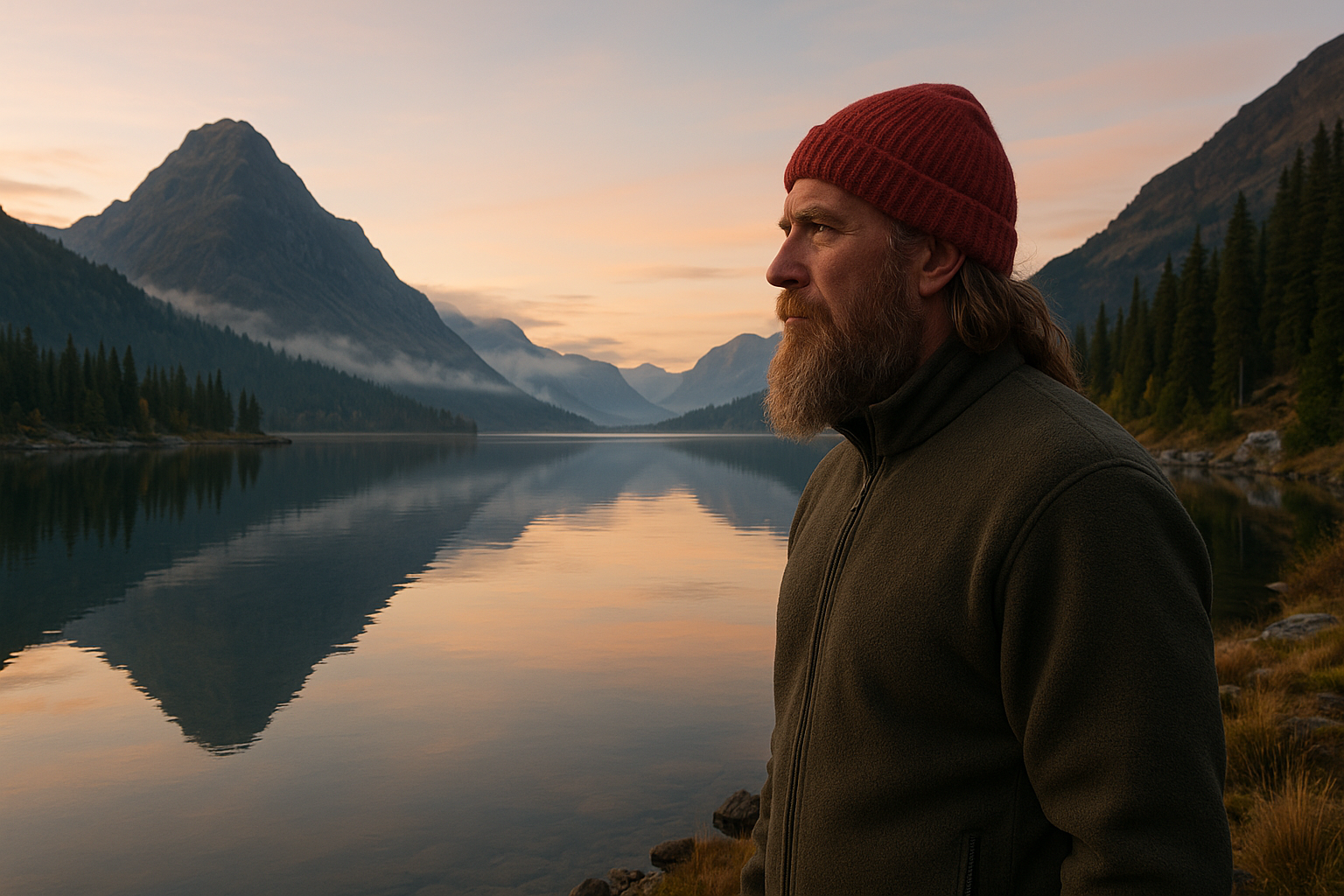
Built from Northern Stillness
By Odin Tu
The camp sits on a small rise of wind carved snow that looks like the back of a sleeping whale. Every direction gives me the same message. White to the horizon. A sky so pale it seems to drink the color out of the eyes. A sun that refuses to lift itself above the rim of the earth. I have been here long enough to learn the movements of a place that barely moves at all. The stillness is not absence. It is structure. It holds everything together the way the skeleton holds the body, unseen yet absolute.
I am writing by the glow of a lamp that smells faintly of fish oil and iron. Outside the tent the cold lays its hand on the fabric and waits. I have come to think of the cold as a craftsman. Patient. Disciplined. Relentless. It tests every stitch. It asks every seam why it exists. The answers that survive become part of your life.
Each evening I turn my field notes into a longer meditation. This is not vanity. It is safety. Memory can be a liar when the mind grows tired. Words on a page will tell the same truth every time you read them. I look down now at the notes from today and from the days before. Distances measured by stride and lull. Temperatures guessed by the taste of air under the tongue. Wind speed judged by the lean of spindrift against the poles. Then a set of observations that matter more than numbers. How the SASTA fleece lays against the skin when the air tells the body to hide its heat. How it behaves when I open the tent door and let the night ask its questions. How it carries the warmth of a man without making that warmth feel like a prison.
We think of stillness as silence yet this land speaks constantly. The ice under the lake groans in long tones that rise out of the water like whales lifting songs toward stars. The tent guy lines hum one note when the wind comes from the north and another when it swings east. The snow makes a dry whisper as grains drift along the ground and then decide to stay. Even the breath sounds different here. It is a short sound. Efficient. No theatrics. The land teaches economy and then asks you to prove you learned.
I have traveled on foot and with pulk from the last black spruce a lifetime to the south. Out here no tree breaks the line between earth and sky. It is a map with almost no symbols. This is a comfort to me. My mind finds its correct shape in empty places. They give it room to stretch. They also make every choice clean. If the wind rises I feel it first in the fabric at my wrists. If the temperature drops I taste it in the space between teeth. If my inner layer begins to saturate I know it as soon as the fleece changes tone against my skin. A person who pays attention never needs a lecture.
The fleece is the quiet partner in this education. Each morning I wake, brush frost from my beard, and slide into a routine that has earned the right to be called ritual. I take a moment with my palms pressed to the jacket to judge the humidity that lives there after the night. It is always lower than I expect. The fibers hold a hint of yesterday yet they never feel burdened by it. I shake the garment once and the memory falls away like a dog shakes off lake water. Then the zipper rises, the collar settles under my jaw, and the day is prepared to meet me with respect.
A good fleece is a meeting place. Base layers send proof of labor. The shell sends news of the storm. In the middle sits this measured fabric that listens to both and decides what goes where. I can hear the decision in the way the jacket warms as I work and cools as I rest. Not abrupt. Not dramatic. Just a slow river moving toward equilibrium. When I drag the pulk across sastrugi that rise like the backs of crocodiles the jacket encourages the heat to stay near. When I pause with one knee in the snow to study a ridge of blown ice the jacket allows the steam to pass through it like breath through a flute. I do not have to think about this. The garment thinks for me and asks for nothing except honest work in return.
The land has moods. Yesterday the wind turned vicious for an hour then went to sleep like a child who burned through his tantrum. The air cleared so fast that every star leaped into view at once. I stood outside the tent and laughed just to hear a human sound in a place where human sounds seem an intrusion. The jacket did not protest. I could feel the cold tugging on the heat under the fabric, but it could not gain a hold. The cuffs sat firm. The hem rested close. The collar turned my breath into a small cloud that rose and vanished. There is comfort, and then there is composure. Composure matters more. A man who maintains composure can do what the day requires. Warmth without composure turns to sloppiness, and sloppiness breeds trouble.
Trouble comes in small increments in the North. You overcook a layer and sweat turns to ice at a rest stop. You underdress and the body spends the afternoon chasing an edge of chill that keeps retreating. You carry your water on the outside of your core and the flask stiffens. You set your gloves near the stove and the leather hardens to a board. You ignore a seam until the wind finds it and then you lose hours to a repair you should have made at noon. Trouble loves a man who guards his pride more carefully than his heat. The fleece is my reminder to guard the right things.
I have learned to test how a garment thinks by handling it in the raw. I crush a sleeve in my fist and wait for the shape to return. I rub it against the ice rim of a pot to see if fibers pill into weakness. I rest my jaw on the collar and breathe into it to watch whether moisture spreads like a dark fan or rounds into tiny beads that dry quickly. I press the shoulder under a loaded strap and then lift my arm to check the flow of fabric. I pull the jacket off and on with damp hands to find out whether the face cloth will drag and punish. Then I listen for the sound of movement. Good gear is not silent because silence is impossible. Good gear makes a sound that belongs here. The jacket I am wearing sounds like snow sliding off a birch branch. Soft and final.
Days without the sun force the mind to manufacture its own light. You either discover a reason to move or you drift toward the edge of stillness where nothing grows. The work we do each day would seem dull to someone who does not understand. I shovel a trench to break the wind at ground level. I pull stakes and move the tent four steps to a better pocket in the snow. I measure fuel and ration it without self pity. I walk a mile in circles just to feel the heart’s music. I adjust the venting on the jacket to match the heartbeat. The zip opens the width of two fingers. Then the width of a glove. Then it closes when the breeze speaks a firm sentence. Another person might think this is fussy. It is not. It is the difference between paying interest and paying principal. The first steals from you. The second builds your house.
I remember a day four winters ago when I ignored such small adjustments. I was crossing a low valley on a route that looked easy from a ridge. The snow was fitful and the sky undecided. I left the fleece zipped to the chin when the grade softened, and I kept my heavy hat on because the wind made me feel brave. In an hour I had drowned my underlayers in my own effort. When I stopped to read a faulty compass my sweat cooled with an eagerness that felt like greed. The body shivered. The brain swung from bright to fog. I knew the signs, and I corrected my errors, but I paid for an afternoon with a night of bouncing between chills and fever inside the bag. That is a tax for fools. I try not to pay it anymore.
Out on this ice plane there are few distractions to hide poor design. You can fool a city, not a plain. The fleece has earned my respect because it refuses a trick. It has no glossy pretension. It refuses to smell like a factory once it has learned the scent of snow. It cleans with simple effort and dries on a line or over the foot of the sleeping bag. It packs without complaint and unpacks without sulking. It accepts a blade on the sleeve without fraying into sorrow. It layers under a shell and over a base with the manners of a good guest. It does not try to be the host. It does not try to be the house. It plays its position and does so with a steady hand.
I wrote earlier that the cold behaves like a craftsman. So must we. The hourly work of living here is a sequence of small crafts performed without drama. I shave curls of fatwood with a knife that remembers a better world. I melt snow slowly so that the pot does not carry the bitter taste of scorched ice. I sew a small loop in the tent door where my gloves can hang. I tighten the lashings on the pulk. I lay the fleece on my knees while I sharpen the axe. The fabric collects the filings and keeps them from wandering where they would harm the tent floor. These are small chores. They add up to a large security. The jacket becomes part of the workshop. A soft anvil. A lap board. A steady wedge between cold and warmth that turns the whole tent into a bench.
Once a day I step away from the tent to let my mind reach farther than the lamplight. I carry a staff and the small pack that always hangs ready. I walk toward a piece of horizon and then choose another and then a third, creating a small triangle so that my tracks lead me home without thinking. On these walks I study the language of the snow. It tells me what yesterday’s wind learned. It tells me where a fox traveled before dawn. It shows me the roll of a small drift that was smooth yesterday and now displays furrows like a plowed field. I answer by adjusting the jacket. A two finger opening when I rise up a shallow slope. A half hand open when I stride level. Closed to the throat when I stop to listen. I never fight the fleece. I consult it. This partnership keeps my heart beating in a key that the cold respects.
Sometimes I imagine the people who made this garment. I do not picture a single factory with loud lights. I picture a series of minds spread across years. One mind decided the density of the pile so that it resists wind more than a city sweater but breathes better than a plastic insulation. One mind shaped the collar so that it protects without scraping the beard. One mind chose a zipper that works when iced but does not snag the chin with each rise. One mind selected the pattern for the shoulders so that a strap sits well and does not roll. One mind chose fabric that will not glare in snow glare. There is a community inside this jacket. I wear the company of hands that did their work with attention. I honor them by paying attention in return.
I say again that stillness is structure. The land organizes itself around rest as much as around motion. A snow plane holds wind inside its own shape. A lake locks energy in a sheet of pressure that sings its long notes. The body stores the day’s heat in a layer that yields to touch but guards the core. That is why I feel admiration for a fleece that understands stillness. Some garments only perform while you move. They shout when your heart is loud and they falter when your heart asks for a pause. The jacket I wear continues to serve when I sit on my heels in the doorway and watch the faint aurora smear a low curtain of green across the edge of the world. It lets me linger without paying for the privilege with a half hour of shivering.
I try to write these things in a way that will still make sense to me when I am old. If I simply wrote that the jacket is warm, I would roll my eyes at my own laziness in ten years. Warm means nothing without time and task. Warm is a description of a relationship, not a quality by itself. The true question is this. Does the garment maintain its character while the day shifts from work to rest to thought and back to work again. Does it react with composure when a gust hits the tent and you step outside to add two more lines. Does it keep its manners when you push the pulk into a wall of sculpted snow and climb behind it to shove. Does it help you restore a calm mind after that shove. Does it forgive mistakes and collect grace. Here the answer is yes.
When the mind grows tired in a world without clocks you learn to make your own markers. I name the hours by the tasks I complete. There is the hour of walking in circles for circulation. The hour of cutting bricks from the hard layer to build a low wall that will blur the wind. The hour of technical work on the stove. The hour of writing. The hour of quiet that feels like a prayer even if no god has been invited. The jacket takes its role in each hour without complaint. It collects a little frost on the chest and sheds it when I brush a sleeve across it. It accepts the heat of the stove while I hold a pot steady. It stands near when I take notes with bare hands and then welcomes those hands back inside its pockets. Each pocket is a small loan office. I borrow warmth and pay it back with labor.
I have learned to trust the indicator that lives in my sternum. When the center of the chest begins to feel like a stone that has lain too long in the shade it is time to change something. Sometimes the change is simple food. Sometimes it is movement. Often it is a small correction in how the fleece routes air. I feel foolish writing about a zipper as if it were important, but it is important. So is the way the hem lays when I sit. So is the way the fabric handles the wet line where breath escapes around a balaclava. The small things add up to a day that ends with the mind still clear and the hands still useful.
A day here ends by not quite ending. Dark arrives yet the land does not close its eyes. Noise travels far through air that carries no moisture to slow it. I can hear my own heart if I wait. The beat becomes prayer. It reminds me why I am gentle with my tools. This jacket is one of them. A man can buy many garments and none will buy him a better life. A man can earn one garment and it can help him build a better life because it organizes his attention around what matters. Heat where heat belongs. Breath where breath belongs. Movement in time with the land.
If there is one lesson I would hand to a younger traveler it is this. Let your middle layer be the teacher. Let it tell you when to stay the course and when to adjust. Do not treat it like a blanket. Treat it like a friend who speaks softly but always tells the truth. I have walked out of hard nights because I listened to such a voice and adjusted before complaint turned to crisis.
I close the lamp and open it again to soften the darkness. The night will visit me many times before I sleep. I will step outside to listen to the lake and to read the tone of the wind on the guy lines. I will look for aurora. I will check the moon even when there is no moon because the act of checking keeps the mind disciplined. Each time I go out I will test the jacket with the same method. I will lift my chin slightly and draw air past the collar to see how it carries the edge of cold. I will feel the pockets for that small banked warmth that waits there like a secret fire. I will let a handful of snow rest on the sleeve to judge whether it melts and wets or beads and blows away. I will come back inside and note the results in the margin of my book.
You might wonder how such a garment intersects with faith. I believe that craft is a form of faith. Faith in the idea that honest work done with care will hold against time and weather. When I pull this jacket close I feel the confidence of people who built for their own use first and for commerce second. That order matters. A thing designed to flatter a storefront will flatter you for a week and then abandon you. A thing designed to survive a season will hold up your own season and then the next. I do not worship objects. I refuse to bow to anything that can be folded. But I honor the makers by carrying their work into places that will tell me the truth about it.
Tonight the camp is quiet enough that I can hear crystal growth in the snow around the tent. The air is so dry that water decides to build architecture rather than fall. I lay the jacket across my chest and let that tiny sound narrate my breathing. A good fleece listens. It hears the small noises your body makes when it fights the air. It hears your shoulders asking for relief. It hears your clean sweat rising in gratitude for effort. It collects those messages and answers them properly. Not with arrogance. With craft.
Tomorrow I will travel west across a line of old pressure ridges. The surface there is a frozen biography of force. Blocks tilt like books left open. The pulk will groan and the rope will sing against the plastic. I will need a layer that stays agile while I work and then stays welcoming while I stop to read the map that the ground has written. I will carry the jacket that has been teaching me all winter. I will risk nothing on novelty. Novelty is for markets. The North prefers patience.
I will wake and lay the fleece in the weak blue light to see if it tells me anything about the night. I will press my ear to the wall of the tent and listen to the weather. I will eat and drink. I will look at my hands and forgive the cracks and the raw places. I will make the first cut in the snow with the staff and then let the land write the rest of the day. When tiredness arrives I will let it speak but not take command. I will let the jacket do its quiet work until the day has given all it can give.
A person who reads this in a warm room may wonder why someone would come here. I ask myself the same question sometimes and then the answer appears so simply that I feel foolish for ever doubting. Out here my mind returns to its right size. In cities it swells. In crowded rooms it shrinks. On this plain it fits. There is no need to compare or to perform. There is only the task. The task is to live well inside the limits that the earth offers today. The task is to notice more. To waste less. To leave behind a line of footprints that tell a clean story.
The SASTA fleece is part of that story. It is a sentence written in patient grammar. It says this. Preserve what is yours. Release what will harm you. Move with purpose. Rest with dignity. Pay attention. Winter understands such sentences and lets you pass when you speak them fluently. The jacket does not make me brave. It makes me honest. It lets me admit weakness to myself before weakness becomes a headline.
Now the lamp needs tending and the breath inside the tent has started to frost the corners of the poles. I will bank the heat and pull the bag up and place the jacket where it can help the night become gentler. I will sleep with my hands inside the sleeves to keep the feeling in the fingers. I will keep my flask tucked by my ribs so that water wakes without a struggle in the morning. These are old tricks learned from older people. The jacket turns them from tricks into habits by making every one of them easier.
When I return from this plain and tell the story of it, I will describe the color of the sky when it almost remembered the sun. I will describe the way the lake speaks when the pressure changes. I will describe how snow can taste like metal and also like bread, depending on how hard you have worked that hour. I will describe a garment that served as willing ally through all of it, built from the stillness that shaped the land where it was born. People will ask what brand makes sense for such a life. I will answer with the name they want and then add the truth they need. Choose a piece that carries the patience of its makers. Choose a layer that understands silence. Choose the one that teaches you to correct small errors before they grow teeth. Then go and learn the language of the plain for yourself.
The lamp flares once when I twist the wick, then settles like a dog curling at the feet. I tuck the fleece beside the bag. The tent walls crackle as frost shifts its weight. Far away the lake talks again in vowels that no alphabet knows. My breath evens. My hands warm in the sleeves. This is home for now. Tomorrow will be another set of careful choices wrapped in cold light. I greet that future like an old friend. I know what to wear for the meeting.
If a single sentence must end this long account it is this. Some things are built to sell. Some are built to endure. A fleece that carries the discipline of the North belongs to the second kind. When you wear it in a place that has no interest in your comfort, you will learn that endurance is a conversation. You bring effort and attention. The garment brings patient craft. Between those partners the stillness turns generous. It gives you safe passage and asks only that you remember where that generosity came from.
I lay down the pen. The jacket waits in the curve of my arm. The tent makes its small sounds. The night breathes. The land and I agree to continue this work in the morning.