Stew, Smoke, and Stubborn Miles
By Papa Gramps
Backpacking will test your legs and lungs, sure. But what it really tests is your patience. You cannot rush a trail. You cannot outpace the weather. You cannot wish your pack lighter no matter how many times you mutter about what fool packed it. And if you do not know how to feed yourself once camp is set, you will curse your own name louder than any thunder rolling off the ridges.
I have walked trails longer than some folks have been alive. My knees are a little stiffer these days, and I move slower, but the lessons stay the same. The pack on your back is your pantry, your kitchen, your bed, and your medicine chest. It does not matter how strong you are if you starve, freeze, or botch your food until your body gives out.
I remember one trip into the Smokies where my grandson swore he wanted to go light. He showed up with a tiny pack, barely big enough for a change of socks and a granola bar. I let him march out all cocky, shoulders loose and smiling. By noon he was looking at me sideways while I adjusted the straps on my MOUNTAINTOP 80L, which carried not only my gear but half of what he forgot. That pack has hauled meat, iron, and wood, and still holds true mile after mile.
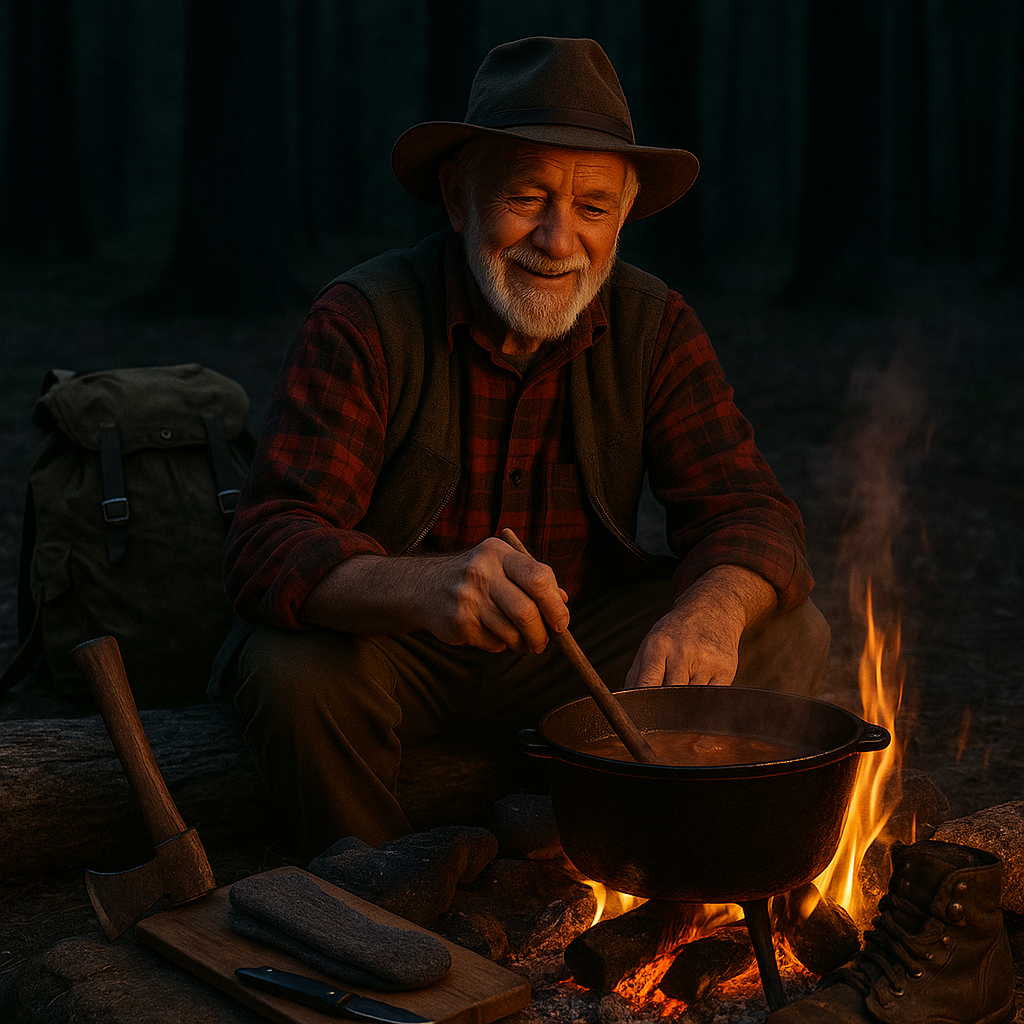
When the rain came he discovered his little nylon pup tent leaked like a screen door. I hauled out a Swiss Outdoors Rain Fly Tarp and strung it high for him to crawl under. He shivered, and I laughed, and I set the Camp Chef Dutch Oven in the coals. The smell of beans, sausage, and cornbread baking in iron put life back into his eyes faster than any pep talk. That is the trick with cooking. It is not just about calories. It is about morale. Hot food will put steel back in a man’s legs when miles have turned them to jelly.
I tell every young one who listens: carry a stove you can trust. Pocket burners are fine if you just want to boil water. But when you want to simmer, fry, or bake, you need iron. Yes, a Dutch Oven is heavy. Yes, it eats space. But when you set it on a fire ring and pull that lid to see steam rise from stew, you will forget every ounce. Out on the trail, good food is worth its weight in gold.
Knives play their part too. I keep a Morakniv Carbon knife tucked in my belt. It has split kindling, carved tent stakes, and buttered biscuits. Simple, sharp, dependable. I have also carried the Buck Zipper Guthook when the trip promised game. Nothing cleans a trout or a rabbit like a blade made for it. My grandson thought his multitool would do it all. That worked fine until he tried to gut a fish and mangled it so bad the crows would not touch it. A proper knife is a kitchen, a toolbox, and a lifeline in one.
Axes are another subject. Folks roll their eyes at the old man packing a Hults Bruk Kisa when they are counting ounces. Then they huddle in the dark because their pocket saw dulled on the second log. A fire worth keeping through a cold night does not come from twigs. It comes from thick rounds split down. A hatchet like the Hultafors Hultan will do in a pinch, but when I want to sit long, cook slow, and drink coffee into the small hours, I bring the big steel.
Food is what makes memories stick. I once packed a Mossy Oak Tanto knife along with that Dutch Oven and cooked a rabbit stew so good the whole ridge smelled of it. I had my grandson stir while I chopped vegetables with the Tanto’s edge. Heavy blade for a heavy task, but it did the job. He still talks about that stew to this day, and it was ten years back. That is how it goes. You forget the blisters and the sore shoulders. You remember the firelight and the food that made you smile.
Backpacking is not just miles and muscle. It is community. Even if you walk alone, the land becomes your companion. The squirrels scolding overhead, the owls calling in the dark, the hiss of your stove or the pop of your fire. These sounds fill the silence and keep you steady. But when you walk with others, the food you share makes you family. I have seen men who barely spoke on the trail open their hearts over a pot of stew. I have seen arguments cooled by coffee passed around in tin mugs.
On that Smokies trip my grandson learned more in three nights than he could have in three months of watching videos. He learned to strike a ferro rod when the lighter failed, coaxing flame from shavings curled with a Morakniv. He learned why socks matter more than gadgets. He learned that when you pack light without wisdom, you end up heavy with regret. And he learned that a belly full of hot stew will make you forget how tired you are.
The trail humbles us all. It strips you down to your choices. Did you pack the right stove. Did you pack the right knife. Did you bring enough to eat. Every answer shows itself when the sun drops and the fire is slow to catch.
I still carry more than most men half my age. They laugh until they smell what is simmering in my pot. Then they sidle closer and hold out their bowls. I feed them, because that is what keeps us human out here. It is not about showing how tough you are. It is about carrying enough to share. That is how the old ways stay alive.
Backpacking is not suffering. It is work, yes. It is pain sometimes, yes. But it is also joy if you know how to carry it. The trail will not give you comfort for free. You have to pack it, cook it, and build it. The Dutch Oven is heavy, but the laughter it brings around the fire is light. The axe is heavy, but the warmth of a good blaze is worth every swing. The pack is heavy, but the memories it carries weigh nothing at all.
So when you shoulder your ruck and step onto the trail, do not count ounces like a miser. Count the meals you will cook. Count the friends you will feed. Count the fires you will sit by while the night closes in. The weight will fade. The memories will not.